
Dissecting Marriage By Faith

mOne of the unique, extra-biblical (and, I would argue, unbiblical) practices of UBF is what they call “marriage by faith”. This statement supposedly means, “By faith, trust God to establish your marriage union.” What it actually means, however, is, “You don’t get to choose your partner. Your chapter director will decide for you, and you have to blindly accept that this is God’s will.” Often, people who hardly know each other or who have never met are partnered in this way. Ultimately, the goal of this arranged “marriage by faith” is not as much biblical marriage as a tool for solidifying the couples’ commitment to UBF doctrine.

Read More

Introducing WikiShepherd

wBy now, our ubfriends readers know that several things are needed in order to understand the ubf organization. UBF is anything but a normal, maintream Christian ministry. They are abnormal, with theology that lives in the space where hyper-evangelicalism meets Buddhism. UBF has a special insider language, a specific heritage they want to defend, and an overly demanding lifestyle they place on members. If you are going to sign your life away with the new UBF covenant of membership, I think you should be aware of the UBF teachings, doctrine, dogma and language. Especially, the UBF arranged marriage practices and marriage training, called “marriage by faith“, ought to be publicly documented. So we are building a Wiki just for untwisting and understanding shepherding ideology, as practiced by UBF. Not much is published yet, but there is much more to come. Anyone is free to create an account an edit using the Wiki, which is the same software used by Wikipedia. Here is the link: WikiShepherd

Examine. Expose. Exert.

gA few years ago, I hinted that I was working on a new website, sort of a mega-anti-ubf site. This is moving forward, and today’s article is a taste of the content I plan to publish. My tagline for the new site is this: examine, expose and exert. I plan to examine many aspects of the UBF group, to expose their abuses and to exert continued pressure on the group leaders to step down, shut down or otherwise overhaul their seriously flawed campus ministry. What gives me the right to do this? Why am I qualified to do this? I am in a unique position, first of all. I spent 16 years as a ubf shepherd, 8 years as a ubf chapter director and 5 years as a former member. During this time “out” of the group, I have become a sort of amateur exit counselor for dozens of ubf members. I have written four books about my insider experiences. I have helped build the ubfriends websites, making a major contribution to the 20,000+ comments and the 700+ articles (perhaps exceeded only by Ben Toh!). Here is my summary I’ve been working on. For decades, ubf leaders told me to examine myself. Now it’s my turn. Now I examine them. For decades. ubf leaders told me to expose my sins. Now it’s my turn. Now I expose their abuses. For decades, ubf leaders exerted undue religious influence on my life and their high-pressure authoritarianism ruled my life. Now it’s my turn. Now I exert massive pressure on them.

Read More

Discern. Defend. Deliver.

A campus welcome?“I am not going to join your Bible cult!” The words sting. My heart races. I smile weakly and walk away. That was my last encounter while fishing on campus for someone to be part of the kingdom of priests and holy nation. What is fishing, you may be asking? What is a kingdom of priests? Good questions. Fishing is the insider language we used at a Korean campus organization called University Bible Fellowship (UBF). Fishing is the group’s interpretation of what Jesus meant when He told His followers they would become “fishers of men” (see Matthew 4:19). The idea was to go fishing on campus. It meant a weekly or daily excursion walking around a college campus and inviting students to Bible study. We had the holiest of intentions in doing this. The fact that I need to translate what I used to do on campus speaks volumes as to why I wrote this book. My hope is that current members will be reading this, and so I begin with some thoughts for them to consider.
Read More

Top 5 Regrets

RegretsA Facebook friend posted this article that caught my attention and got me thinking: The Top Five Regrets of the Dying. My first question was, “Do I have any of these five regrets?” I don’t exactly know why but my very next question was, “Would UBF people have these regrets?” Before I answer these questions, here are the top five regrets of the dying:

  1. I wish I had followed my dreams and done what I truly wanted.
  2. I wish I hadn’t worked so hard.
  3. I wish I had expressed my feelings more often.
  4. I wish I had stayed in touch with my friends.
  5. I wish I had made more time in my life for nonsense and laughter.

Read More

Are Islam and Democracy Mutually Exclusive?
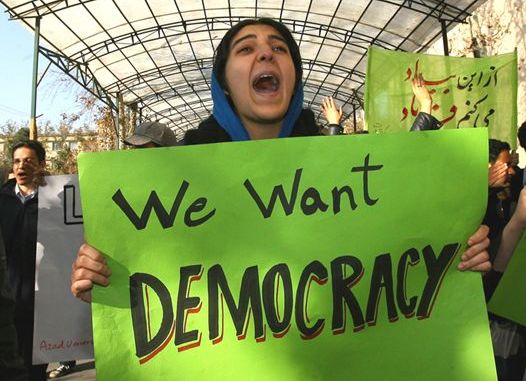
Are Islam and Democracy Mutually Exclusive?

“Have I made it clear enough that people, no matter where they come from, all like to be free? That freedom is not a Western idea? There was one more thing about that myth the myth of America that I wanted to mention. The way some people talk about so called Muslim societies as if they are sort of trapped by what they call culture and religion, and there is no way that they can change. But this is a double standard, because we should remember that in the West, in the mid-nineteenth century, women did not have the right to vote, that there were many people in the U.S. and Europe who were saying that a woman’s place was in her home, and that the Bible says so. America has a history of slavery until the late 1950’s and early 1960’s the buses and restaurants were segregated and a lot of blood was shed in order for African Americans to gain equality. And the arguments that were used against women and against abolition are the same kind of arguments that are now used against change in relation to women’s rights in Muslim majority countries. Because, if Sharia laws are Muslim culture, then slavery and burning witches in Salem are the culture of this country, not Emerson and Thoreau and Martin Luther King. And the Inquisition is the culture of Europe, not St. Thomas Aquinas or Dante or Cortes. People should understand that we have our Hafez and Rumi and great poets and great philosophers, and that we also have a set of traditions that are regressive and oppressive and need to be changed (Azar Nafisi, Reading Lolita in Tehran, pg 368).”Read More

Onward

crusades17I don’t think it’s particularly helpful, or even useful (however that’s defined) to attack a work of any kind on account of its age or the culture it which it grew up. It fails to answer the question of if it’s truthful, which is really the only question worth answering. It is not at all useful to say that a practice or book or hymn was right “back then” and not right now. Read More